

What else am I growing?? I am SO glad you asked!
I feel truly blessed (yes, really, #blessed) to be growing on a whopping 2,700 square feet. As far as farms go, this is really small – it’s not even 1/10th of an acre – but as a garden, it’s huge! It’s comprised of two 18′ x 75′ plots, and if I could start over again with both plots together from the beginning, I probably would have planned it all very differently. Nevertheless, I started with one, and took over the second (which has become the bulk of my cut flower endeavour).
My original plan for the first plot was to divide in thirds: the “top” third to be raised beds for a vegetable and herb garden, the “middle” third as a wild pollinator garden, and I imagined the “bottom” third becoming a cottage style patio garden with more medicinal perennials. Of course, it has evolved! And it will continue to evolve, since I am only one person with two hands, and it is not anywhere near “complete” yet.
My Garden Layout
What do you get when you cross a designer with a gardener? Well, this: a full, roughly to-scale overhead plan view of their garden.
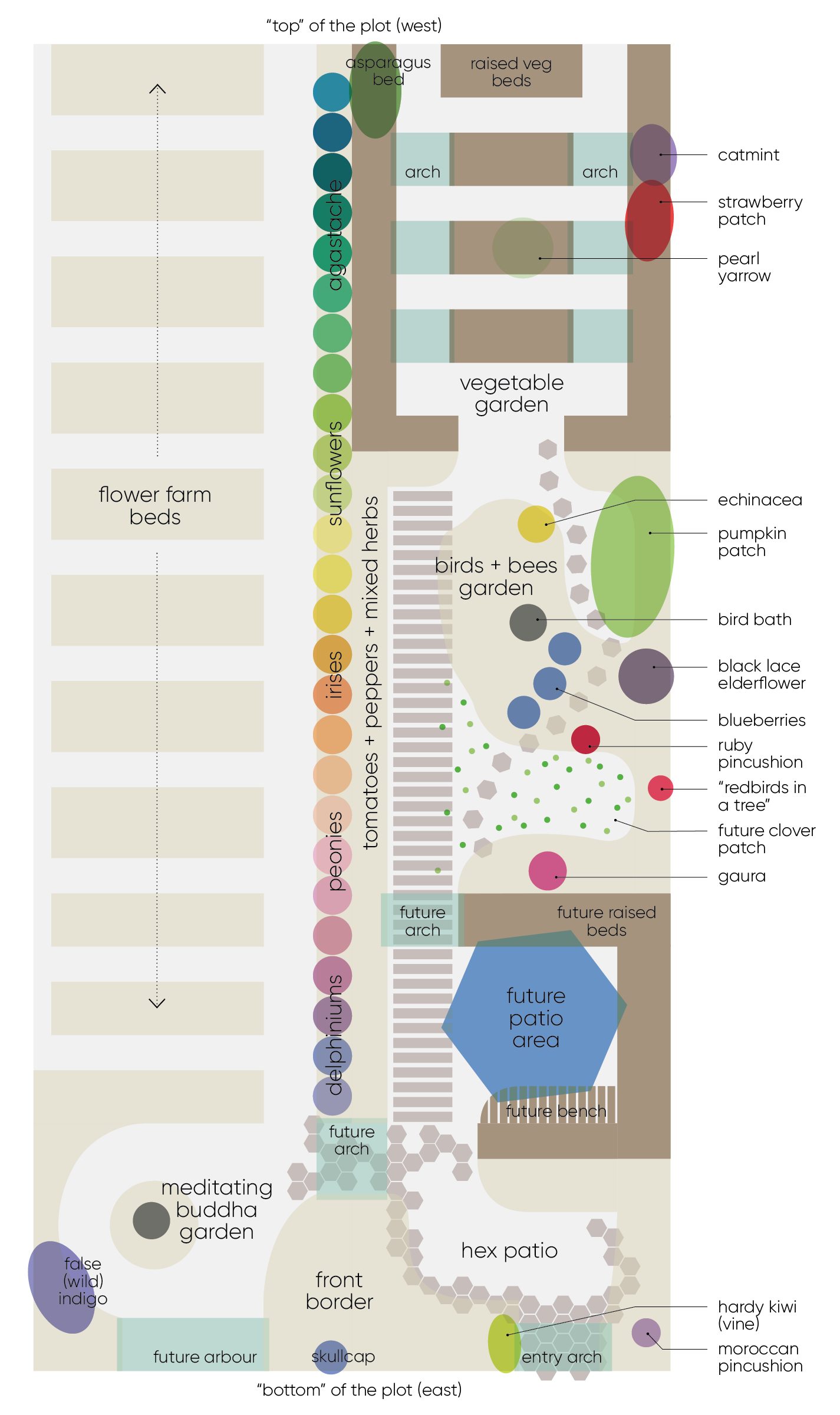
I access my garden from the “top” (west) or “bottom” (east) end, and I have garden neighbours to the north and south. One day, I will find the time and energy to build up the stone patios I imagine at the bottom, or front, end of my garden – I’d like it to be wheelchair accessible. I’d like to develop a little bit of shade and a little wind-block where I can sit and paint, or chat with friends. Many of my pathways have yet to be developed at all, but I know they will come with some patience (and luck, for finding the materials!).
As much as I can, I try to take advantage of how I place everything. I make an effort to layer spaces, considering height, shade, and soil drainage for each plant, and I try to mix plant functions. By this, I mean that I:
- Inter-plant tomatoes and peppers with companion herbs like thyme and parsley, and trap-crop annuals like sweet alyssum.
- Incorporate pollinator favourites around continuously blooming fruits and vines – I have a bush of catmint next my strawberry patch, and I grow borage around the base of my peas and cucumbers.
- Try to think about how to bring more birds in – I have worked in an elderberry bush for shade, shelter and its winter berries, and I leave plants like my liatris and echinacea through the winter for their seed pods.
Because of this approach, I have managed to develop a high level of biodiversity. Every year I grow over 400 different things in my 2,700 square feet, and it blows my mind how it all fits!
A Few of My Favourites
Since there’s too much to look at in detail, here are a few highlights from the layout above:
For the Pollinators:
The bees will always be my priority in the garden, and they are excellent at adhering to the “if you build it they will come” principle. So, if I want the bees to pollinate my strawberry blooms, or ensure the success of my tomatoes, I give those bees all the reasons I can to come around and stick around.
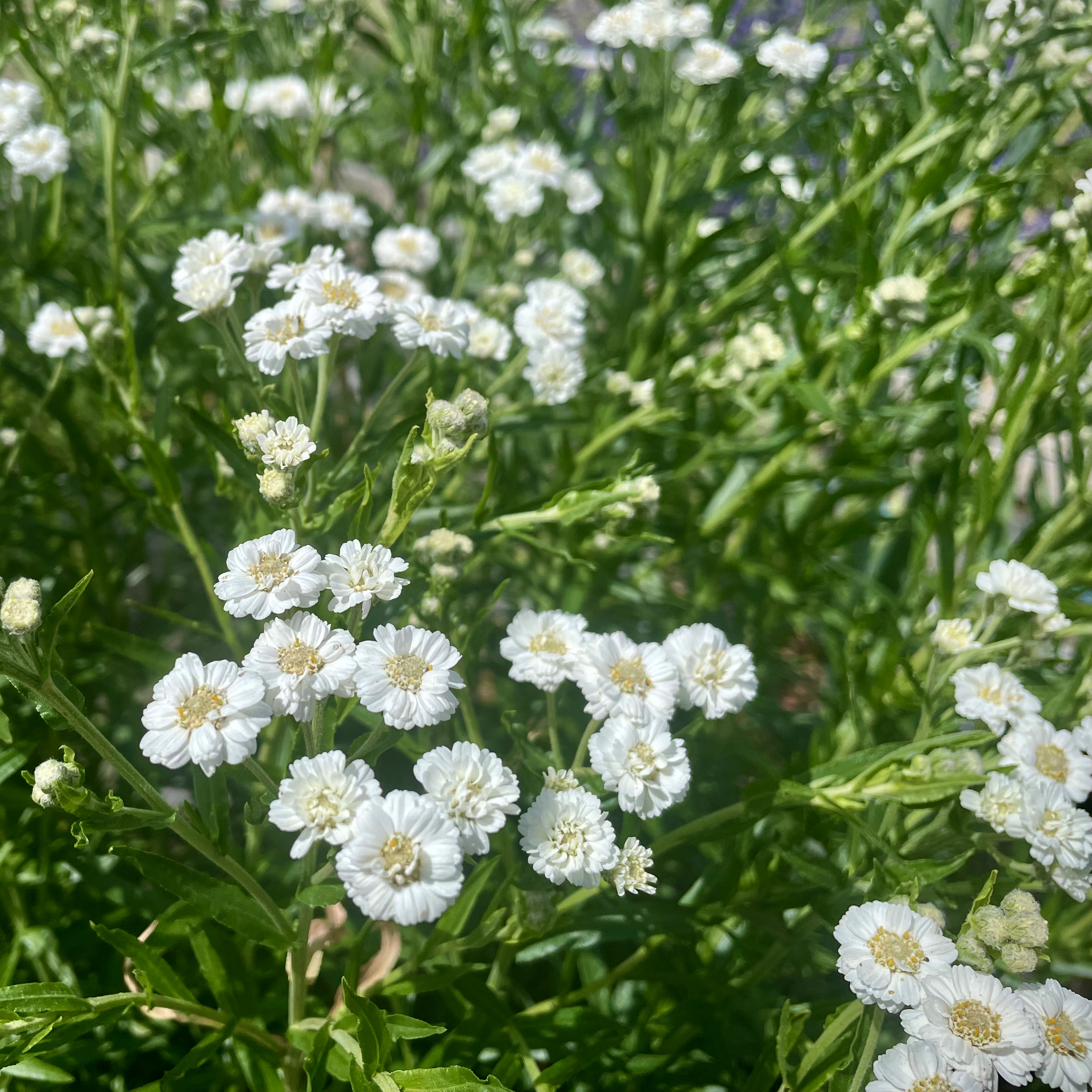
Double Diamond Pearl Yarrow
achillea ptarmica (perennial)
I started this yarrow from seed (from Baker Creek) in spring 2023. I planted two 2.5″ pots, and by spring 2024 it has grown to about two square feet of tall, branched blooms that rival the usefulness of baby’s breath (without being invasiveness). While I don’t often see honey or bumble bees on this yarrow, it is constantly attracting other tiny pollinators. It spreads a bit like mint – by rhizome – so, rather effortlessly. I regret planting it in one of my raised beds for the sole reason that it has established itself so well, but it has certainly served its purpose well! This fall, I plan on dividing it out into my cut flower beds for next year.
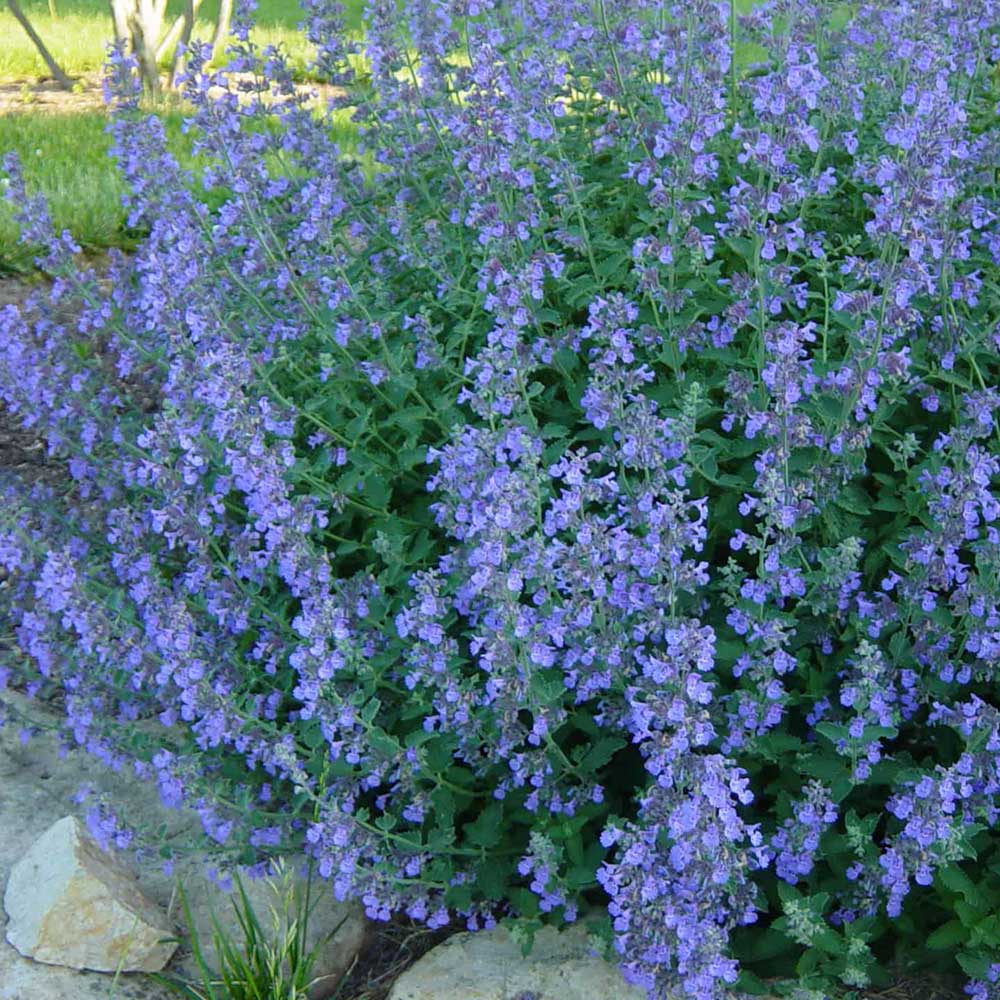
Walker’s Low Catmint
nepeta x faassenii (perennial)
This is not my photo, but I chose one that looks much like mine this year. I scored this beauty at the Okanagan Xeriscape Association (OXA) spring sale last year, and thank goodness! I have my mom to thank for my appreciation of catmint, and how well it attracts the bees. Every garden needs some! It is perfect to include anywhere in or around your veggie garden. I have it cuddled up to my strawberry patch to make sure the strawberry blooms get the attention they need. It’s a lovely colour, and yes – cats do love it too!
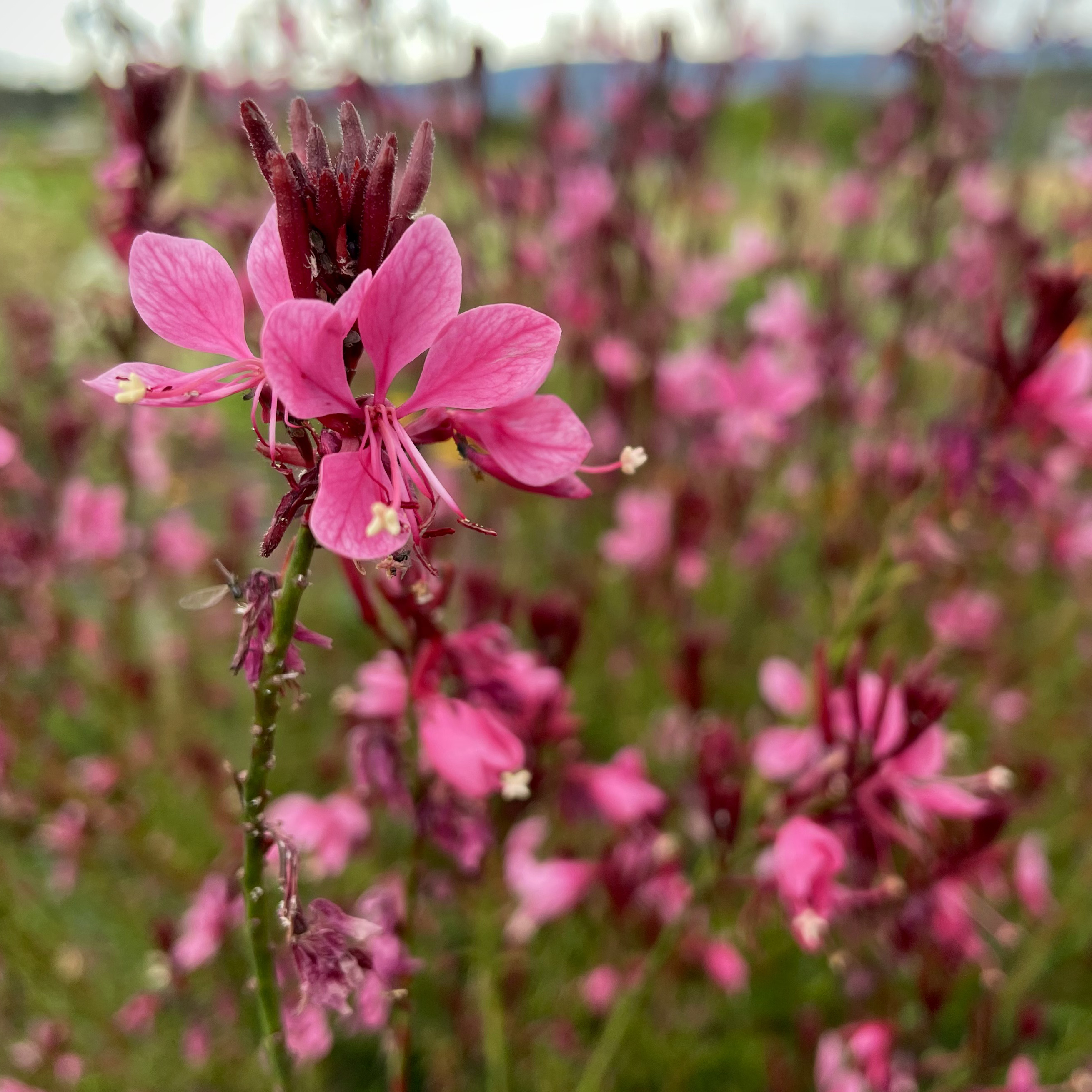
Gaura
gaura lindheimeri (annual)
I had never heard of this plant before last year, and now I’m not sure I will ever grow a garden without it! Once it started blooming it did NOT stop. No deadheading necessary, I swear this plant just keeps getting prettier. The honey bees were always on it. Last year, I grew “Baby Butterfly Dark Pink” gaura (photographed above). This year, I successfully started a healthy “Sparkle White”, but I sent it home with my mom! The seeds were a real slow start, and when I came across a tri-colour “Passionate Rainbow” at a local greenhouse, I snagged it!
For the Birds:
Not only are birds entertaining in the garden, but many of them can serve great purpose where pest (bug) control is concerned. If you want the birds to help you control the bugs, you’ve got to give them some reasons to hang around! For American Robins, a bird bath goes a long way. For Swallows, bird houses often do the trick well enough. You’ll do even better if you consider their needs through all seasons, though.
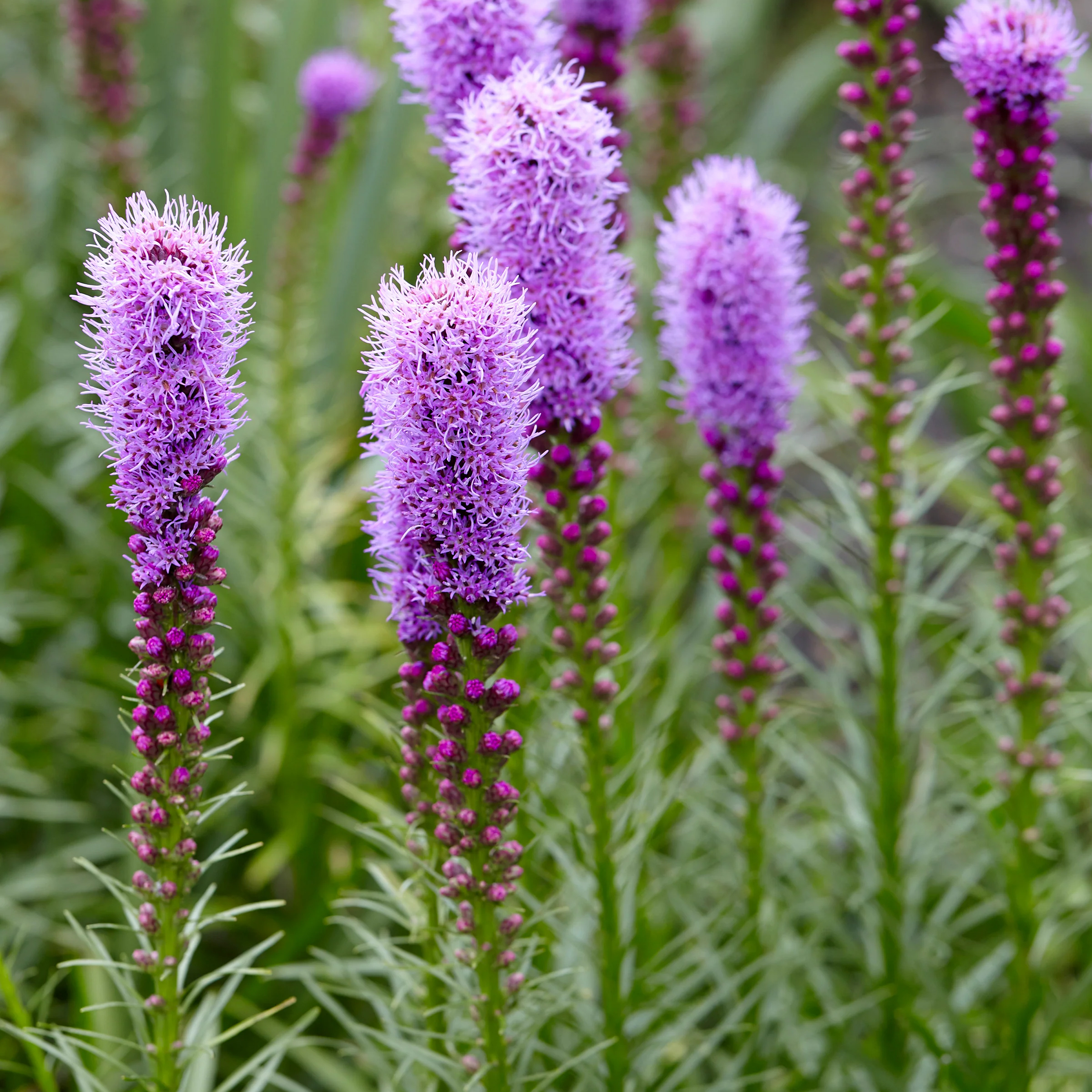
Kobold Liatris
liatris spicata (perennial)
Description.
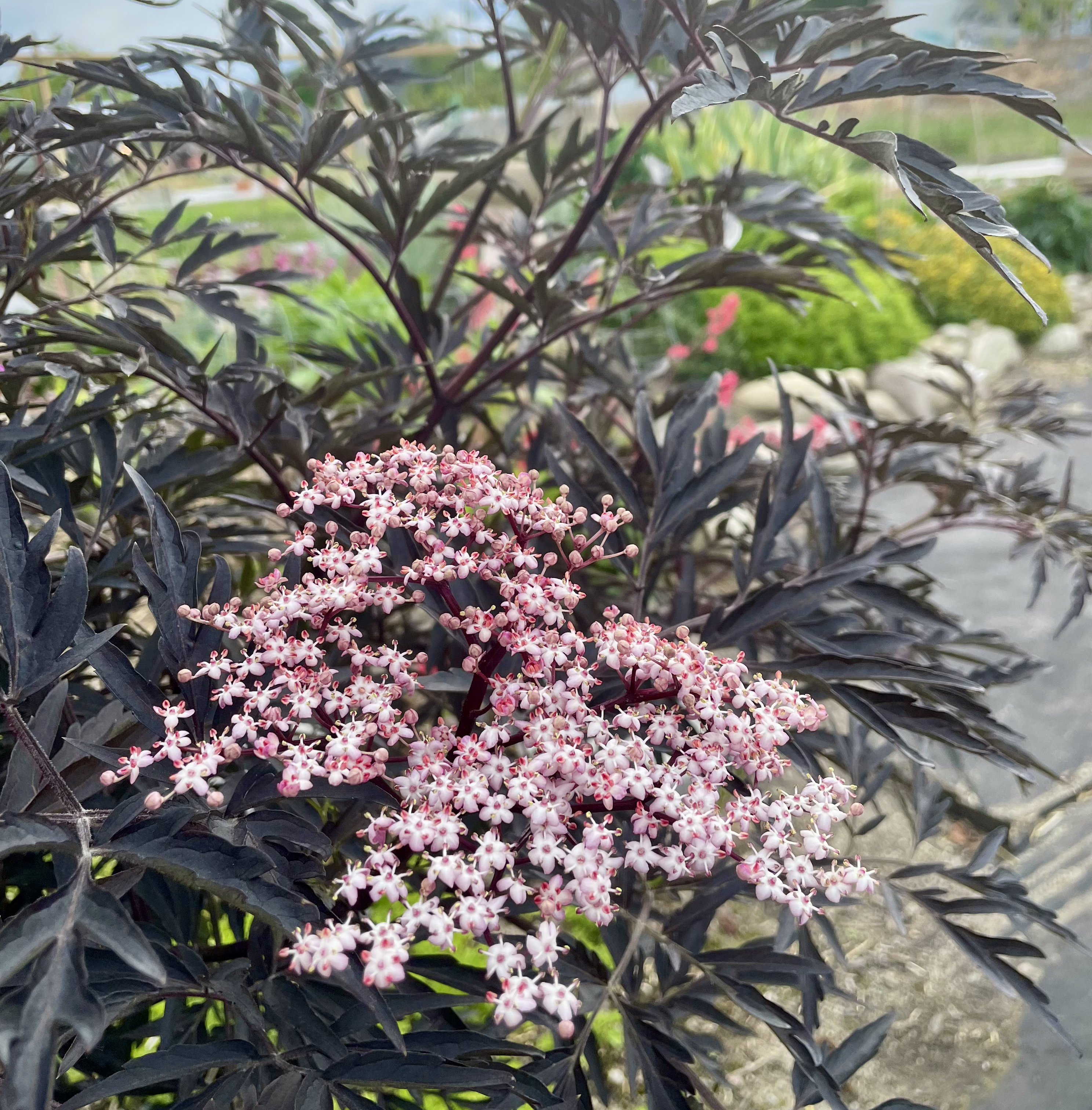
Black Lace Elderberry
sambucus nigra ‘eva’ (perennial)
It is so exciting when a single plant can check so many of your boxes! Once mature, I look forward to making a simple syrup from the blooms of this beauty. In the meantime, it’s blooms will support the pollinators, and when left to mature into berries, it will serve to feed birds through the fall and winter.
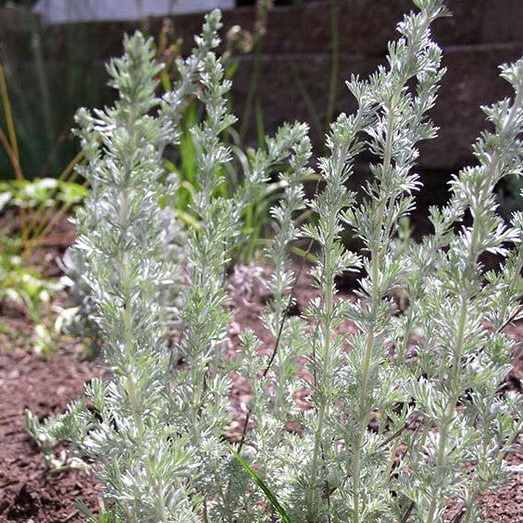
Pasture Sagebrush
artemisia frigida (perennial)
Semi-evergreen, drought tolerant, woolly, silver-green, and fragrant – how much more could you ask for? If I’m really honest, I bought this plant because of how soft it feels. I have fallen in love with it for how incredible it smells. And, I am grateful for it because it is a native perennial that looks beautiful in the breeze, and it shades my bird bath. Local Indigenous people have used this plant for centuries. Medicinally, it has been used for coughs, colds, heartburn, indigestion, headaches, fever, and to repel mosquitoes.